In Guyana, Climate Justice is Queer Justice
t every turn, Bourda Market is a jolt to the senses. This fall weekday in Georgetown, Guyana, is no different. Cars honk, plastic bags rustle. Women carry umbrellas to stave off the burning equatorial sun. Dancehall music blares in the distance as Sherlina Nageer browses outdoor stalls that are a hyper-color display of reds, oranges, yellows, greens, and purples.
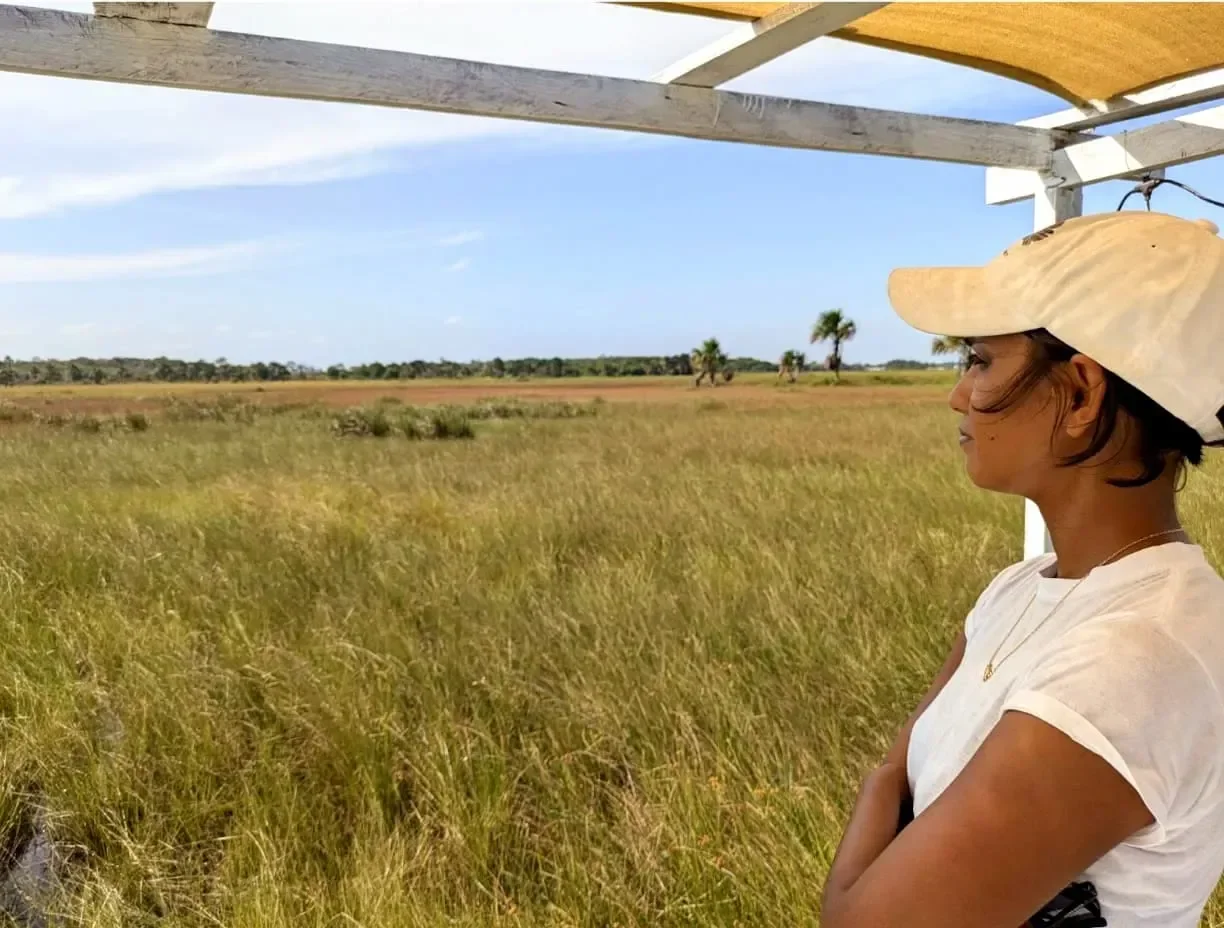
For Nageer, a queer eco-feminist who views the environment through an intersectional lens, the capital city’s market is more than a place to buy produce. It’s a way to gauge health—of the economy and climate.
“Good afternoon,” Nageer says, stopping at a stall. Nageer is slight, with graying hair and a “One Love Guyana” tattoo on her arm. She points to a bin of locally grown tomatoes. “How much you want?” A woman tells her 600 Guyanese dollars (USD $2.85). Nageer keeps walking; she remembers a few years ago when they were only 100 Guyanese dollars (48 cents) per pound. Instead, she contemplates stocking up on ginger.
Temperatures have been above normal lately—it’s the first thing locals talk about—and are forecast to worsen by the holidays, when most Guyanese have ginger beer in their hands. Ginger doesn’t do well in a drought.
Nageer recently created the Queer Eco Corps of Guyana, an initiative under the broader Greenheart Movement she co-founded two years ago, which aims to deepen the connection between queer and environmental issues. She’s always thinking one step ahead not only for herself, but for her community as Guyana gets hotter, the fires burn bigger, and the rain falls harder.
“The situation is going to get more precarious for everybody. People who are already vulnerable, like queer people, are not going to be able to pivot,” she says. “So what can we do now to build up our capacity and resources?”